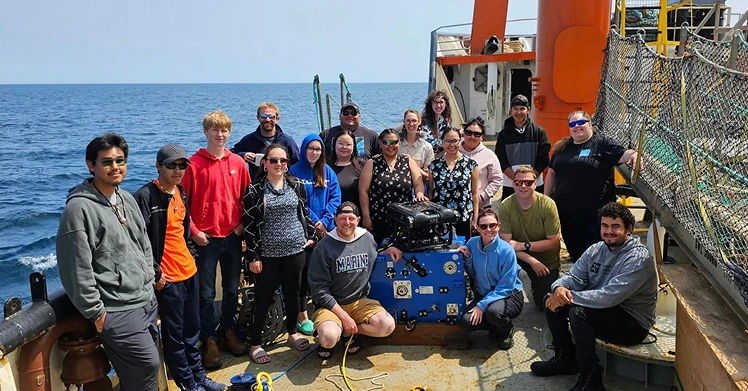
The Sea Experience in Shipboard Oceanography (SESO) program at ASU BIOS (Arizona State University-Bermuda Institute of Ocean Sciences) on the island of Bermuda invites graduate students and early career scientists to fully participate in research cruise aboard the R/V Atlantic Explorer. Participants will prepare for, and embark on, a 5-day expedition to the Bermuda Atlantic Time-series Study (BATS) providing unparalleled insight into the logistics required to execute a research cruise. Bursaries are made possible in conjunction with the Canadian Associates of BIOS (CABIOS).
Developing Research Skillsets for the Future of Marine Exploration
Training content is based on MEOPAR’s four challenge areas (Ocean Observation, Forecasting and Prediction, Coastal Resilience and Marine Operations) and core content areas relevant to Canada’s next generation of marine professionals.
Find Training Opportunities
Open Opportunities
CABIOS, Sea Experience in Shipboard Oceanography (SESO) Program
SESO Recipient Names:
Camryn Stang
(2025)
Becca Beutel
(2025)
Emily O'Grady
(2026)
Internship Recipient Names:
Ellise Fetter
(2025)
Nicole Tam
(2025)
Katelyn Saric
(2026)
Johanna Marshall
(2026)
Past Opportunities
Saroma Sea Ice School
Saroma Sea Ice School is a hands-on field school in Japan
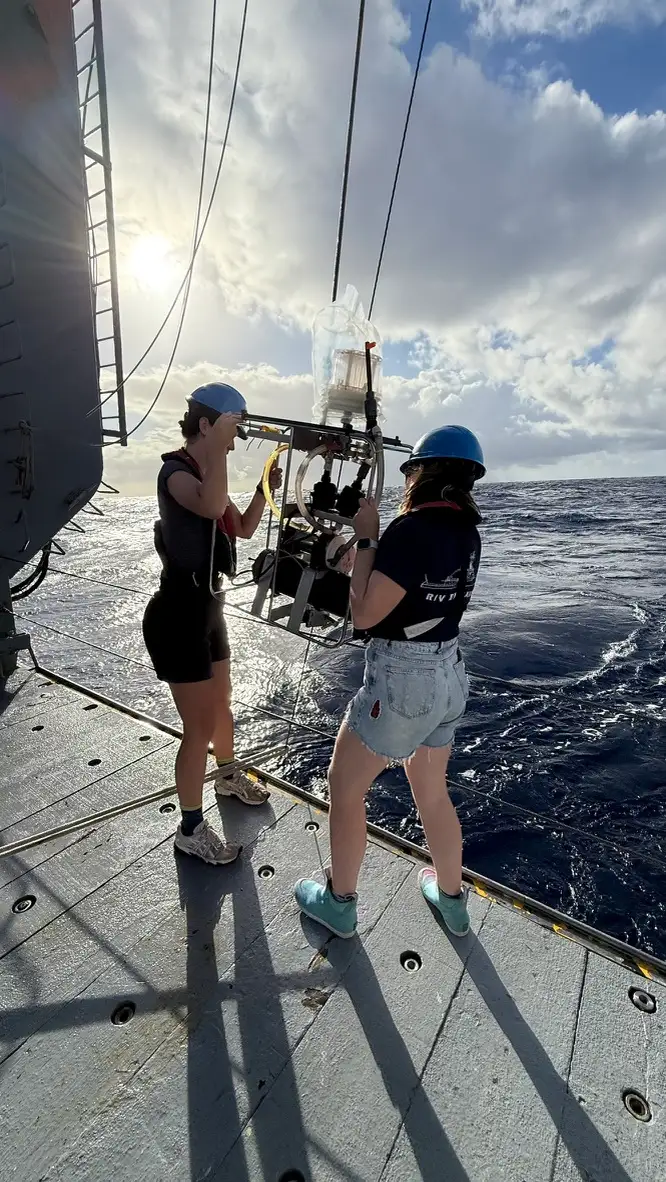
The Saroma Sea Ice School is an interdisciplinary winter field school for early-career scientists focused on the interactions among sea ice, snow, clouds, and aerosols in polar regions. Through a combination of classroom lectures, expert-led workshops, and hands-on fieldwork (including sea ice coring and atmospheric sampling), participants explore the key processes that shape the Arctic and Antarctic climate systems.
The school is co-organised by BEPSII, CATCH and Cice2cloud.
Recipient Names:
Emily Jones
(2026)
Gaël N'doutoume-Paquet
(2026)
Inge Deschepper
(2026)
Canada Sweden Arctic Expedition
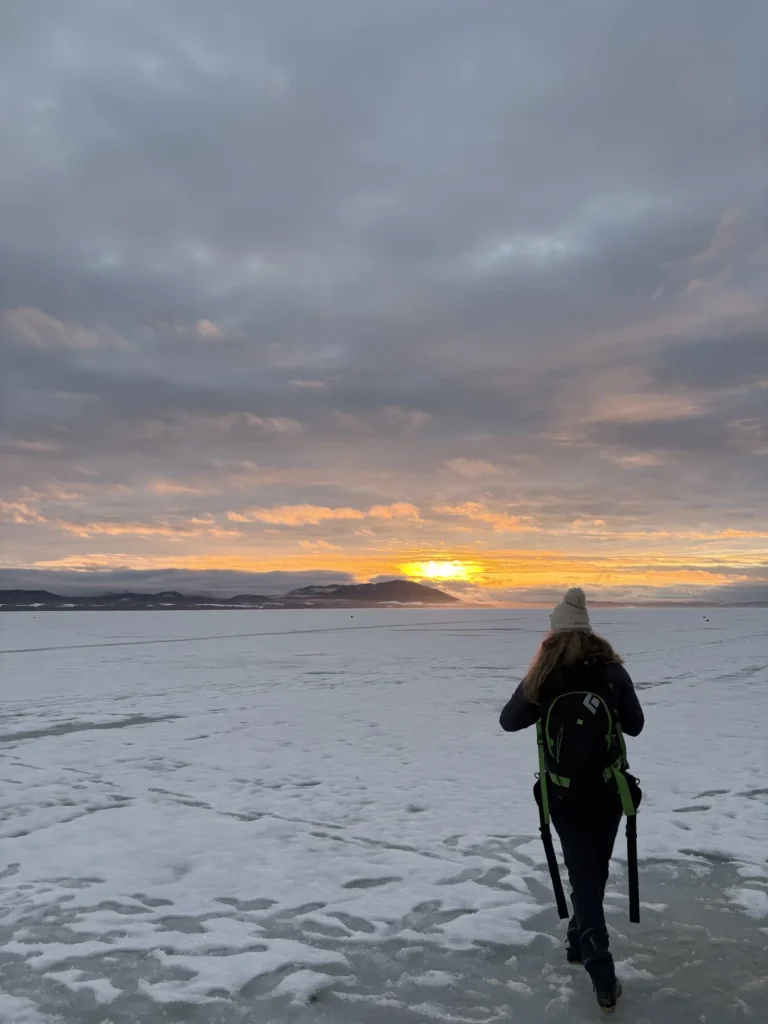
The joint expedition aboard the icebreaker Oden and the Canadian Coast Guard Ship (CCGS) Louis S. St-Laurent supports two complementary missions. As part of the United Nations Convention on the Law of the Sea (UNCLOS) program, researchers map the Arctic Ocean seabed. At the same time, an international research school brings together doctoral students and early-career researchers to study the Arctic climate system while gaining hands-on experience conducting research and fieldwork in one of the world’s most challenging environments.
Recipient Names:
Daniel Rudbäck
(2025)
Lina Rotermund
(2025)
Morgan Griffith
(2025)
Jonas Stankevicius
(2025)
Neil Brubacher
(2025)
Florence Beaudry
(2025)
Chimira Andres
(2026)
Brianna Barnhart
(2026)
John Collins
(2026)
Sarah Daves
(2026)
Marie Engel
(2026)
Raphael Gagne
(2026)
Kareem Hammami
(2026)
Janik LeBlanc
(2026)
Joel Nordine
(2026)
Felix St-Denis
(2026)
Melissa Westland
(2026)
Jena Zumaque
(2026)
Rich Pawlowicz
(2026)
Renewable Energy Expedition
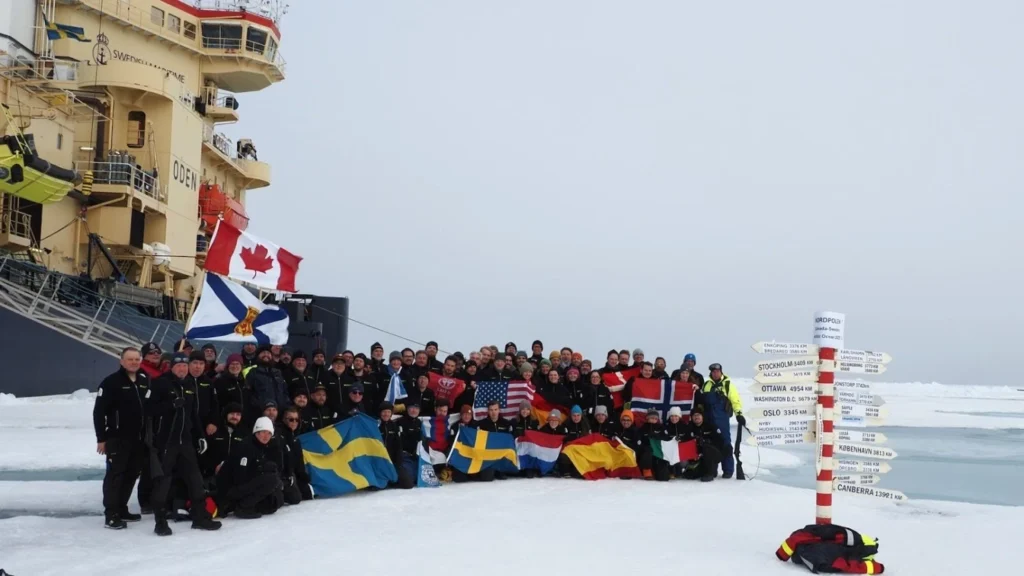
Aboard the RRS James Cook, this expedition supports marine spatial planning for offshore wind energy by mapping and characterizing areas with potential for renewable energy development. Participants contribute to a range of scientific activities, including sediment sampling and analysis, oceanographic sampling, mooring operations, bathymetric mapping, sub-bottom profiling, and marine mammal monitoring, while gaining hands-on experience in multidisciplinary marine research.
Recipient Names:
Olivia Chapman
(2025)
Chelsey Karbowski
(2025)
Are you a Student or Early Career Scientist?
MEOPAR helps early career scientists and students take their work further. We connect you to a national network of researchers, funding opportunities, and partnerships that can help turn your findings into applications that coastal communities and the marine economy need. Stay in touch and stay in the loop, so the opportunities within this network grow as you do.
Career Opportunities from MEOPAR’s Network
Benefits:
- Work in the ocean sciences
- Remote work environment
- Training and development budget to support your professional goals