Building Opportunities and Breaking Down Barriers for Indigenous Involvement in Ocean Science in Atlantic Canada
For thousands of years, coastal Indigenous communities in Atlantic Canada have observed the natural environment, gaining a deep understanding of the ocean. Yet, Indigenous communities and their next generations now face barriers to equitable participation in the marine sector, including involvement in research, access to career and youth opportunities, and inclusion in policy-making decisions. Organizations like Miawpukek Horizon Maritime are working to break down these barriers.
The 2025 Indigenous Led Expedition Community Science and Youth Leadership Liaisonis an initiative led by Greg Jeddore from Miawpukek First Nation, supported by Ken Paul, a consultant and fisheries expert from Wolostoqey First Nation, and both Chief Brad Benoit and Chief Mi’sel Joe of Miawpukek First Nation. Miawpukek seafarer, Faron Joe, has taken the lead on youth engagement.
“This is giving First Nations youth the opportunity to be able to learn their culture, where they come from, and learn about western science and the opportunities within the marine sector.”
– Greg Jeddore, Project Lead and former natural resources manager for the Miawpukek First Nation’s Natural Resources
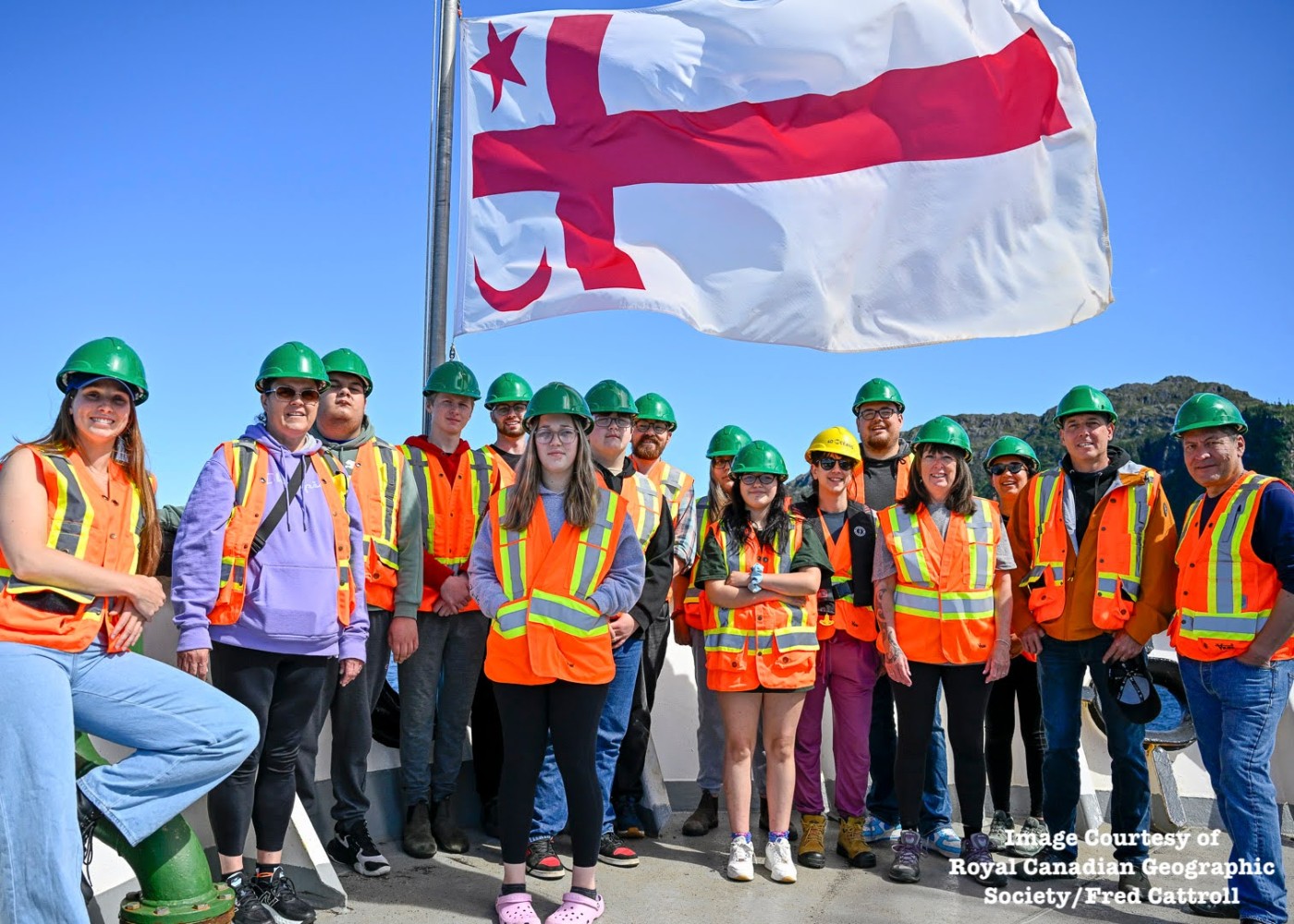
Through a hands-on, community-focused approach, this project aims to create new opportunities for coastal Indigenous communities and engage Indigenous youth in the ocean sector. The project will use the two-eyed seeing method, which blends Indigenous Knowledge with Western science.
As part of the 2025 Indigenous Led Expedition Community Science and Youth Leadership Liaison, an Indigenous-led research mission aboard the Polar Prince will give Indigenous youth the chance to engage directly in hands-on ocean science.
Last year, two youth groups participated in similar missions on the Polar Prince, participating in real-time scientific findings, including the significant discovery of a large field of soft corals, which opened the door to further research. Backed by a host of collaborators, including the Audubon Society, Canadian Geographic, the Marine Institute, and the Department of Fisheries and Oceans (DFO), these missions have already proven highly effective in providing a broad scope of educational resources to youth and creating important scientific ties within the community.
One youth participant, Julie-Emma Jeddore, from Miawpukek First Nation in Conne River, Newfoundland, reflected on how powerful the experience was:
“Being a 15 year old Indigenous youth from Miawpukek First Nations, Conne River, Newfoundland, the Indigenous Led Expedition gave me the opportunity to experience something new that I thought I would never do. It gave me the opportunity to experience work life on water. Being on the Polar Prince spending time experiencing different things, making everlasting memories, and getting to know all the amazing people and building friendships with them. What I really enjoyed the most about being on the vessel was all the ocean science and being able to see the sea floor and getting to see a big coral garden I had never seen before in my life.”
Managing Director at Miawpukek Horizon Maritime, Richard Maclellan, said that the results they saw from the expeditions last year were invaluable:
“What we’re seeing here, taking this new approach, is really interesting. Learning a little bit more about involving traditional knowledge and how to communicate that means the outcomes are really good.”
Greg added just how impactful the two-eyed seeing approach is:
“It’s about getting youth out on the water, learning their culture and the history, and how it fits with Western science. It’s bringing out those awesome results that we’re seeing right across Canada. Being a part of that initiative is just a small step that’s leading into a bigger step.”
Beyond the youth component, the work that Greg and Miawpukek Horizon Maritime are doing through this project will foster meaningful discussions that better enable coastal communities to use scientific research to inform local decisions and provide input on national and regional policies.
“We want to make sure we’re sitting at the table with the policy makers, saying this is what we know from our elders, this is what our communities need, and what needs to happen in these areas,” explained Greg.
“It allows us to be at the forefront. The research will prove that yes, the Indigenous people are right, because we did the scientific research and it’s proven fact … that’s helping the policy makers to make those decisions and it’s part of this program that helped us to do that.”
“What we’re doing here is developing the capacity for the nation to lead its own research and to show other First Nation communities that this is something that can be done,” concluded Richard Maclellan.
The overall project focuses on the opportunities for governments and organizations to play a crucial role in fostering reconciliation with First Nations. This creates potential for procurement and business development within the marine sector and emphasizes the significance of Indigenous-led projects and businesses in recruiting Indigenous community members to take on leadership roles in marine initiatives.
Through MEOPAR funding on this project, First Nations have the opportunity to develop strong leadership in marine areas, paving the way for future business development and economic growth.
The Knowledge Mobilization Fund (KMF) supports researchers, post-secondary institutions, not-for-profit organizations, and others within Canada’s ocean community by encouraging them to think beyond the academic sector when sharing research and important findings.
To learn more about KMF, visit MEOPAR’s website, and stay up to date on KMF project stories by following MEOPAR on LinkedIn and Instagram.