
AI Meets the Ocean
The opening remarks for the workshop, presented by Anne-Sophie Ste-Marie—CIOOS Coordination Office Director, November 4, 2025 / Kirsti Burnett, Pisces
Experts gathered in Halifax to explore how Artificial Intelligence is transforming the way we understand, predict, and protect the ocean.
When scientists, technologists, and policymakers from across Canada and around the world gathered in Halifax on November 4 and 5, one idea brought them together: how Artificial Intelligence can revolutionize our understanding of the ocean.
Hosted by MEOPAR and CIOOS with support from Fisheries and Oceans Canada, the Understanding and Predicting the Ocean Using Artificial Intelligence workshop turned the Halifax Convention Centre into a global hub of innovation and collaboration. The two-day event brought together AI specialists, ocean researchers, policymakers and data experts from the G7 and beyond to discuss how intelligent technologies can accelerate ocean research, enhance prediction models, and drive more effective responses to environmental change
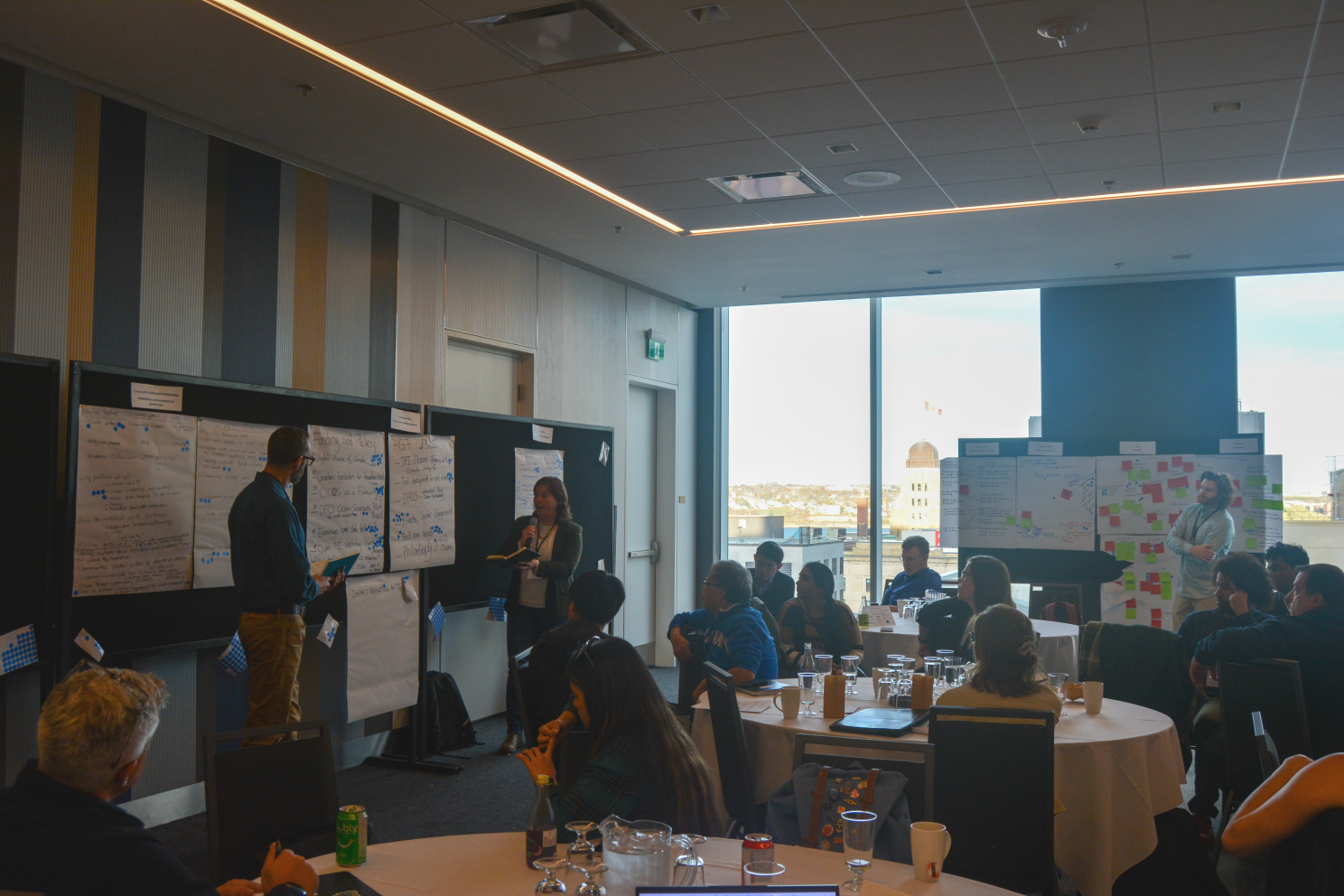
Participants gather for the final breakout session of the workshop to discuss tangible action-items for AI integration into Canada’s ocean sector, November 5, 2025 / Kirsti Burnett, Pisces
"By bringing together experts from Canada and around the world, we created a space for open discussions and shared expertise on technical, ethical, and policy challenges. This kind of international collaboration is essential to build responsible and sustainable solutions that transform our ability to observe and understand the ocean."
– Anne-Sophie Ste-Marie, Director of CIOOS Coordination Office
The workshop’s agenda focused on four transformative use cases, each co-led by experts in their respective fields. Topics ranged from deep learning models improving ocean forecasts, to AI systems that automatically identify marine species through images and sound, to algorithms that detect anomalies in environmental data. The final session looked ahead to agentic AI tools, intelligent assistants capable of harmonizing datasets, generating metadata, and simplifying access to ocean information through natural-language queries.
Each case study underscored how AI can make research faster, more open, and more collaborative. As MEOPAR and CIOOS emphasized, building trust and transparency in how data is used, and ensuring accessibility for all partners, is just as important as technological advancement. Beyond the technology, the true story of this event was one of connection. Representatives from federal science agencies, leading universities, and ocean technology firms sat side by side, sharing insights, challenges, and visions for the future. The hybrid format and breakout sessions opened the floor to voices across disciplines and time zones, reinforcing that the future of ocean science depends on collective intelligence, human and artificial alike.
By linking data infrastructure, ethics, and innovation, the workshop reflected MEOPAR’s ongoing mission to connect Canada’s marine research community and strengthen the nation’s ability to observe, predict, and respond to ocean change.
The discussions did not end in Halifax. Participants left with a shared commitment to continue this collaboration through pilot projects, training initiatives, and cross-border data partnerships. Plans are already underway to expand these conversations into concrete action: integrating AI models into operational forecasting, developing shared datasets aligned with FAIR and CARE principles, and creating opportunities for students and researchers to build new skills at the intersection of AI and ocean science.
As the workshop concluded, one theme resonated throughout the room: the ocean community is ready to embrace AI, but to do so responsibly, inclusively, and collaboratively.
For MEOPAR and CIOOS, this event marked another step forward in shaping the next chapter of ocean research, one where data moves faster, insight runs deeper, and Canada continues to lead in advancing knowledge for a sustainable blue future.
The momentum generated during these two days is now being carried forward through Building Bridges, a growing Community of Practice designed to sustain this conversation and turn shared ambition into coordinated action. As work continues across institutions and sectors, the community offers a common space to exchange expertise, explore practical applications of AI, and co-develop initiatives that strengthen ocean research and stewardship. With ongoing learning sessions, collaborative discussions, and space for new partnerships to form, CIOOS’ Building Bridges represents the next phase in supporting responsible innovation at the intersection of AI and ocean science, and a pathway for continued engagement well beyond the workshop.
