
Introducing SEEDS
Photo credit/ Jamie Gauk, Ducks Unlimited Canada. Patch of Lyngbye’s sedge that shows the undercutting effects of erosion.
Written by Chantelle Abma. Originally published on Ducks Unlimited Canada. Reposted with permission.
E
very year, nearly four million cubic metres of sediment is dredged from the Fraser River to keep navigation channels clear. Half of it is shipped offshore and deposited in deep marine disposal sites, a one-way trip for a material that used to shape the river’s marshes, sustain salmon and build the delta over millennia.
The Sustainable Ecosystem Enhancement with Dredged Sediments (SEEDS) initiative asks a simple question with big implications:
What if we stopped treating sediment as waste, and started treating it as a regenerative resource?
Launched through a collaboration between Ducks Unlimited Canada and the University of British Columbia’s Coastal Adaptation Lab, SEEDS brings together First Nations, municipalities, regulators, scientists, engineers and conservation groups to rethink how sediment moves through the Fraser Delta and how it could support ecological resilience, community safety and climate adaptation.
The project is in its early stages, but its purpose is clear:
SEEDS is laying the foundation for a regional roadmap that makes beneficial sediment reuse easier, more coordinated and more impactful.
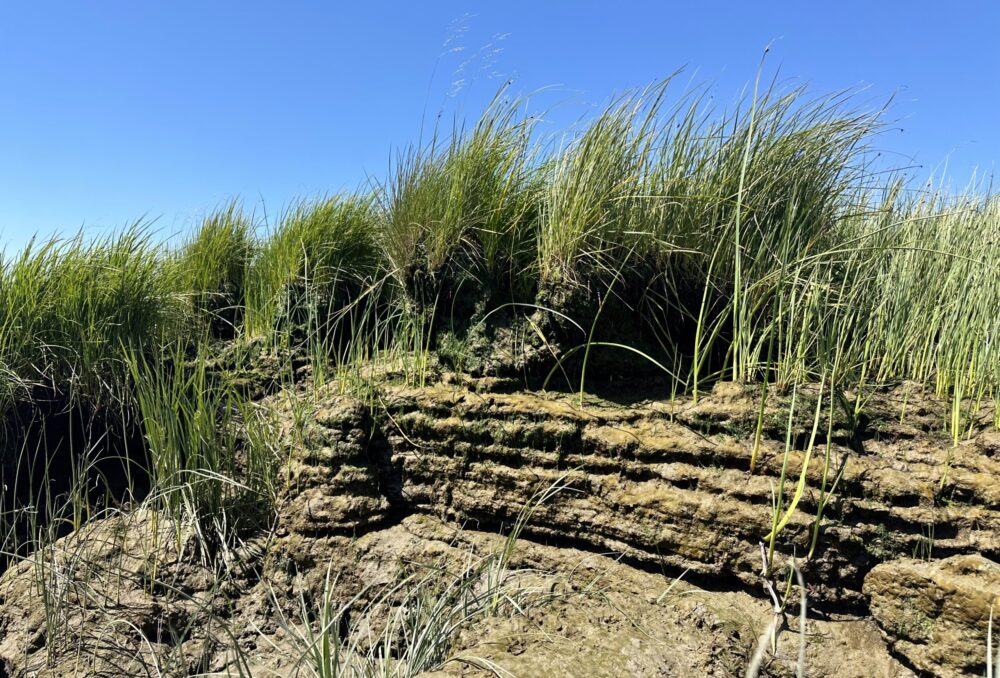
The layers of historically built-up sediment are visible here. The roots of the tidal plant species that grow on this spot are able to hold the base together, where other areas are washed away. © Jamie Gauk, Ducks Unlimited Canada
Why SEEDS? Why now?
The Fraser Delta is one of the most dynamic, productive and climate-vulnerable landscapes in Canada. Marshes are eroding, sea levels are rising, communities are protected by aging dikes built for a different era and the ecological systems that once rebuilt themselves are now starved of sediment while facing a multitude of other stressors.
Meanwhile, dredging continues, but the benefits of that sediment don’t flow back into the places that need it most.
SEEDS steps into this gap by helping partners across the region:
- Understand the full sediment system, from river processes to disposal pathways
- Document lived experience and Indigenous stewardship knowledge about how sediment shapes place
- Explore opportunities for local reuse in habitat restoration, flood adaptation and nature-based solutions
- Align research, policy and design so sediment can support long-term resilience rather than be lost to the ocean
It’s a shift in mindset from linear disposal to circular value.
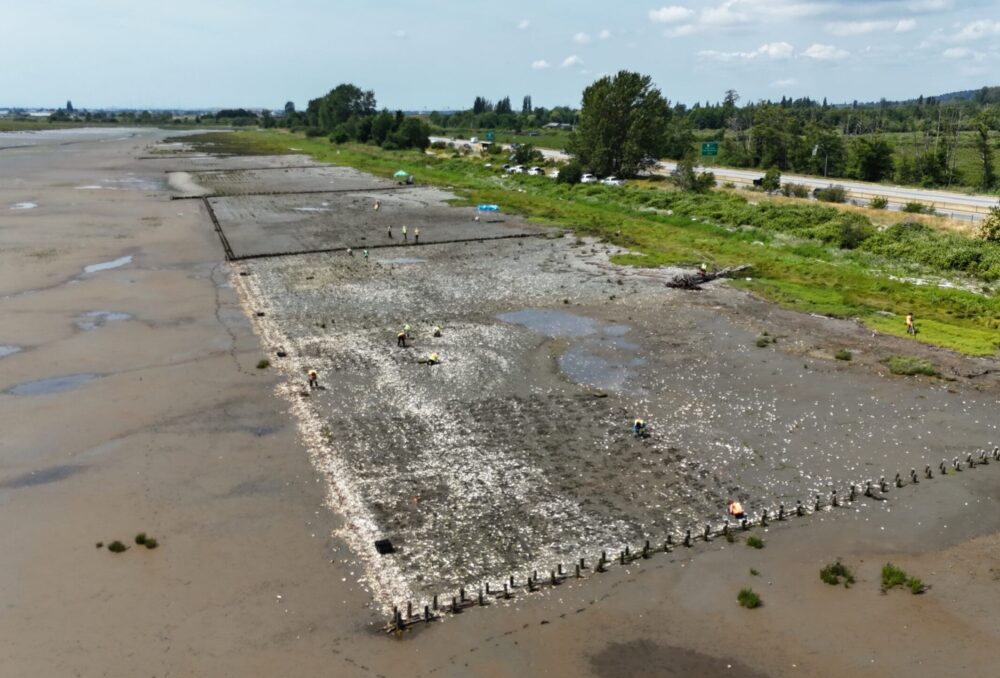
The Living Dike in Boundary Bay reflects the type of nature-based infrastructure possible with reusing dredged sediment. Each of the plots visible in this image hold reclaimed dredged sediment which is held in place by a variety of natural structures. Ongoing monitoring will show the effectiveness of each plot. © Jamie Gauk, Ducks Unlimited Canada
What SEEDS will do
SEEDS is a multi-year effort that weaves together knowledge-gathering, community engagement, scientific analysis and applied design. Its core activities include:
Listening and learning across the delta
Through interviews, workshops and field visits, SEEDS is collecting knowledge in a variety of ways. Local and Indigenous insights will be gathered through intentional engagement where communities wish to contribute. Technical and scientific expertise will be gathered through collaborative consultation and input from various organizations across the Fraser River Delta, and the lived experiences of how sediment affects fisheries, flood risk, navigation and coastal change will be collected through consultation with interested parties.
This is where the foundation is built: by understanding the real needs, ideas and stories of the people most connected to the land and water.
Mapping what we know (and what we don’t)
An online StoryMap will become the project’s digital backbone. It will share visualizations from UBC’s Coastal Adaptation Lab, short video narratives, accessible summaries of sediment data including beneficial reuse projects such as the Sturgeon Bank Sediment Enhancement Pilot Project and the Mud Bay Nature-based Foreshore Enhancements, and place-based histories of erosion, flooding and marsh change. This hub will grow over time and remain open to communities, partners and decision-makers.
Identifying opportunities for beneficial reuse
Once the regional picture is clear, SEEDS will examine where sediment could help in a variety of ways, including restoring eroding marshes, supporting living dike or hybrid infrastructure designs, piloting nature-based flood protection, building elevation and resilience to sea-level rise where ecosystems are being squeezed out and reducing the volume of material sent offshore. These options will be shaped collaboratively and grounded in ecological, cultural and engineering realities.
Building a path forward
By the end of the initiative, partners will co-develop a community-informed roadmap. This living document will outline priority opportunities and pilot concepts, gaps in the current research and opportunities within policy, permitting or regulatory frameworks, as well as highlighting any identified design approaches suited to different parts of the delta, while taking account of identified long-term economic and ecological benefits.
Instead of a prescriptive plan the roadmap will set a shared direction for a region that has long needed one.
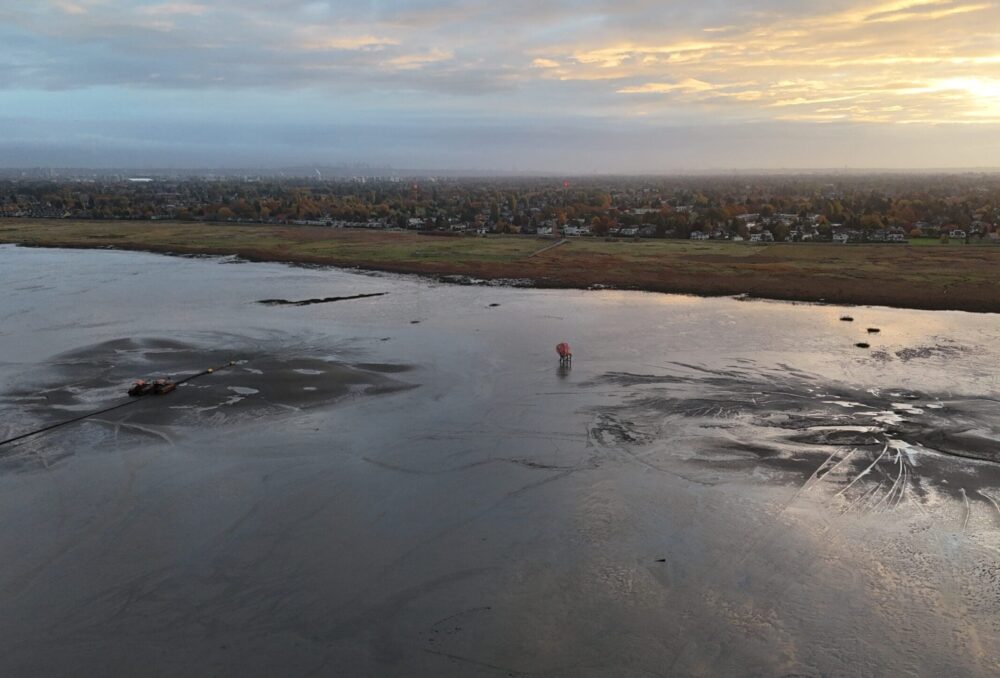
Two mounds are visible in the foreground where reclaimed sediment from local dredging was distributed along the Richmond foreshore west of the Steveston Dike. © Jamie Gauk, Ducks Unlimited Canada
A collaborative effort
SEEDS is intentionally designed as a networked initiative; its strength comes from the diversity of people, disciplines and worldviews involved.
This project is co-lead by Ducks Unlimited Canada and the UBC Coastal Adaptation Lab, alongside the UBC Coastal Systems Engineering Lab, with funding from the Government of Canada through the Marine Environmental Observation, Prediction and Response Network(MEOPAR), the Nature Force and the Canadian Society of Landscape Architects.
This collaborative model reflects the reality of the Fraser Delta: no single actor can address sediment loss, marsh decline or coastal resilience alone.
