
Critically endangered Southern Resident killer whales face a growing threat: a noisier Salish Sea in the Northwest Pacific.
When the Sea Gets Too Loud for Killer Whales
Photo credit: Janine McNeilly. A Southern Resident killer whale surfaces within the Pender Vessel Restricted Zone on World Orca Day, July 2025.
Written by Laura-Maria Martinez (MEOPAR), June 22, 2026
Modified from the original publication by Raincoast Conservation Foundation
Southern Resident killer whales live in one of the noisiest stretches of ocean on the Pacific coast. Within this region, Boundary Pass and Haro Strait — key Salish Sea channels and core habitat for killer whales — form the primary maritime gateway to and from the Port of Vancouver, one of Canada’s largest and busiest ports. Every cargo ship, tanker, ferry, and recreational boat that transits these waters contributes to an underwater soundscape that the whales must navigate to find food, communicate with family members, and survive.
“We’ve known for years that underwater noise is a problem for killer whales. What we didn’t have, until now, was a detailed, decade-long picture of how much things have changed, or a rigorous assessment of whether current management measures are making a difference”, explained Dr. Valeria Vergara, who runs Raincoast’s Cetacean Conservation Research Program.
Tracking acoustic change
Underwater acoustic data have been collected from two hydrophones deployed in strategic locations within killer whales’ habitat in the Salish Sea. The Saturna Island Marine Research and Education Society (SIMRES) has maintained a hydrophone off Monarch Head, Saturna Island, since 2014, and Raincoast Conservation Foundation deployed a hydrophone off Wallace Point, Pender Island, in October 2023. Both underwater microphones are located directly within or near the Pender and Saturna Vessel Restricted Zones in the Salish Sea. These are designated areas where vessel traffic is seasonally slowed or restricted to reduce underwater noise and protect endangered Southern Resident killer whales.
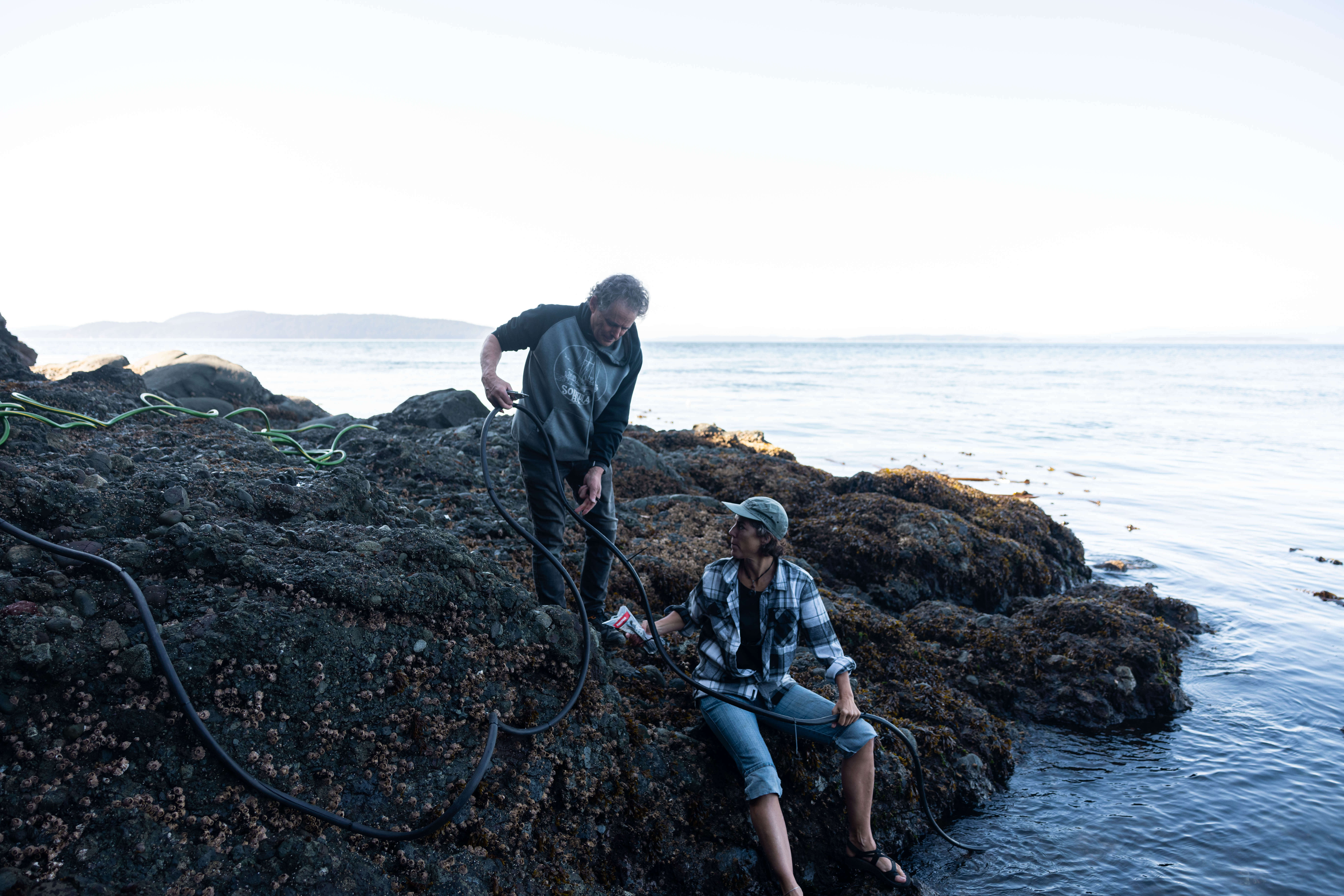
Dr. Valeria Vergara and Dr. Lance Barrett-Lennard, Cetacean Conservation Research Program Directors at Raincoast, prepare the Pender hydrophone for deployment. Photo by Alex Harris.
The acoustic analysis, conducted by SoundSpace Analytics, compared underwater noise in 2017, 2023, and 2025 using different measures. One key metric, “Listening Space Reduction”, estimates how much of killer whales’ acoustic habitat is blocked by vessel noise at any given time, while “Quiet Time” measures the rare moments when the whales can communicate without interference.
Killer whales: lost in the noise
“The findings are sobering”, affirmed Dr. Vergara. Between 2017 and 2025, the acoustic environment of the Salish Sea deteriorated sharply and consistently. Vessel traffic has grown by more than 30%.
“But it’s not just the number of vessels that matters, the type of traffic is equally important”, said Janine McNeilly, the first author of the Raincoast technical report NoiseTracker: Tracking Vessel Noise and its Implications for Southern Resident Killer Whales in the Salish Sea. Recreational boat trips nearly tripled over the same period, while tanker traffic -large ships that carry liquid cargo- more than doubled.
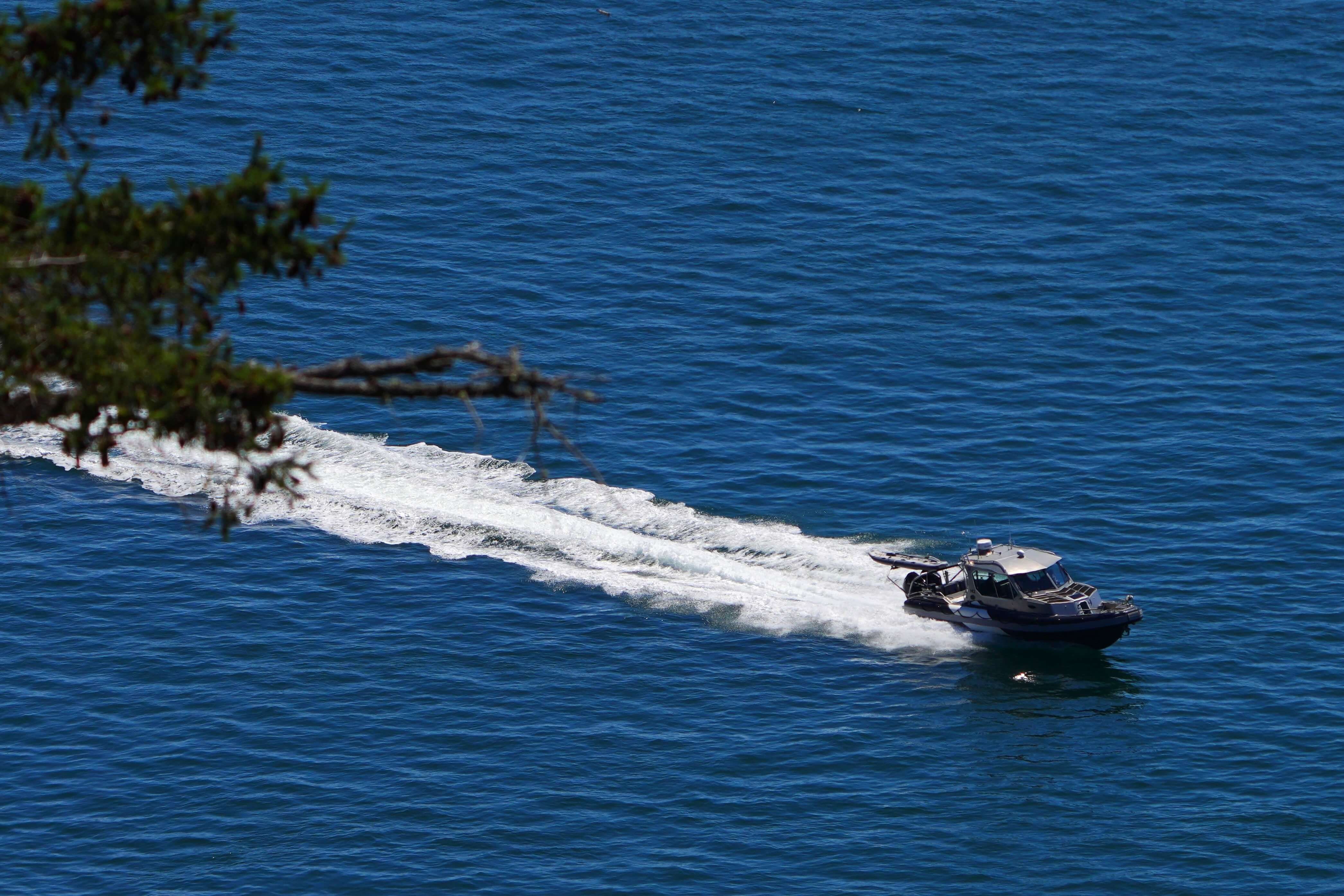
A recreational vessel transits through the Pender Vessel Restricted Zone. Photo by Janine McNeilly.
Most passing vessels were found to completely overwhelm the whales’ communication frequencies, pushing Listening Space Reduction to 100%. “During those transits, the whales’ entire acoustic space was briefly eliminated”, clarified Janine McNeilly. These findings suggest that current management measures, including the Vessel Restricted Zones, are not sufficient to address the cumulative acoustic burden these whales face across their habitat and throughout the year.
According to the report, several factors likely limit the effectiveness of Vessel Restricted Zones. The Zones are seasonal, operating only from June to November and leaving substantial portions of the year unprotected, their fixed boundaries do not always match where whales are present, and compliance among non-commercial vessels is inconsistent. In addition, the zones are narrow enough that killer whales within them can still be exposed to noise from vessels operating just outside their boundaries.
Taken together, the report’s findings point to a clear conclusion: the acoustic environment in critical killer whales’ habitat is degrading, and current measures are not sufficient to reverse that trend. “That doesn’t mean nothing can be done”, declared Dr. Vergara, who secured a MEOPAR Grant in 2025 to mobilize this project’s findings.
Solutions still exist
For example, areas where boats must slowdown could be expanded, and limits could be set on the amount of noise large commercial ships are allowed to produce. Vessel Restricted Zones could also be redesigned to better protect key killer whale feeding areas, with stronger enforcement to ensure compliance.
Killer whales depend on sound for virtually every aspect of their lives: finding food, maintaining family bonds, and navigating their world. “The least we can do is understand what we are taking from them, and act on what we know”, agreed the two Raincoast scientists and authors of the MEOPAR-funded report.
To explore the acoustic world of marine mammals—and what is lost when it becomes too noisy—visit the NoiseTracker Education Hub. Created by Raincoast, it offers a captivating deep dive into the sounds of killer whales and their underwater environment.
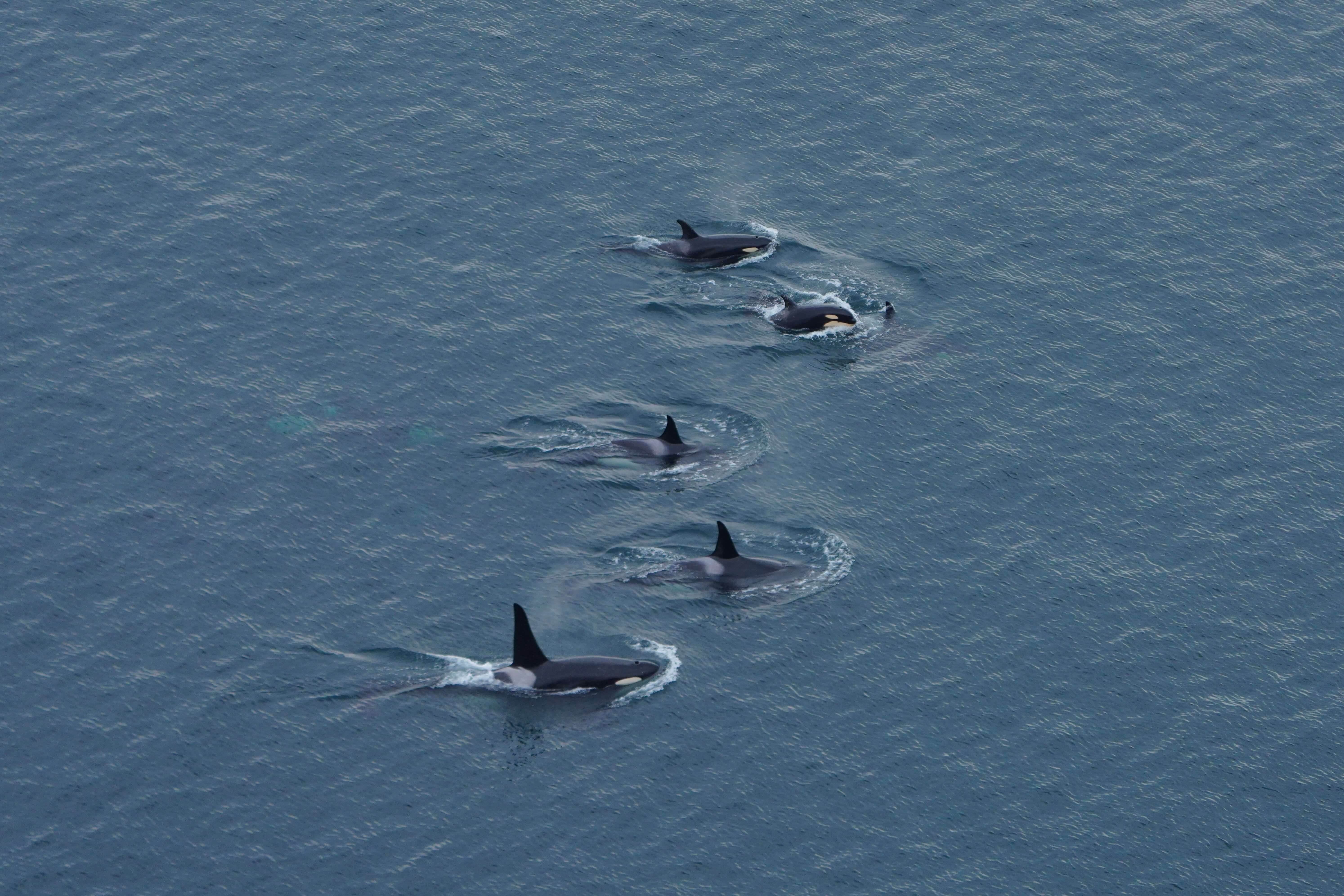
A Southern Resident killer whale pod swims closely together as they travel through the Pender Vessel Restricted Zone. Photo by Janine McNeilly.
Key links
Technical report: NoiseTracker: Tracking vessel noise and its implications for Southern Resident killer whales in the Salish Sea | Raincoast
Education hub: Section 1. What is sound? | Raincoast
